
The history of Coloring Concepts
Fifty years of learning by coloring
It started in 1977 with one book and a simple idea: you learn what you color. The Anatomy Coloring Book went on to set the standard for all other science-based coloring books for the past 50 years. Here is how it grew into a series used in classrooms around the world.
1977
The Anatomy Coloring Book by Wynn Kapit and Lawrence M. Elson is published.
1980
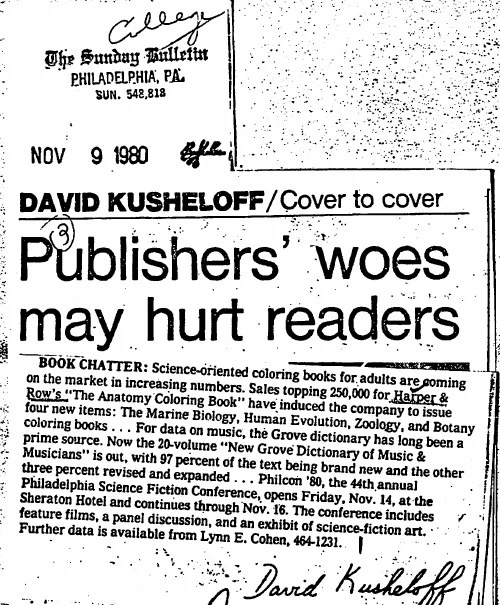
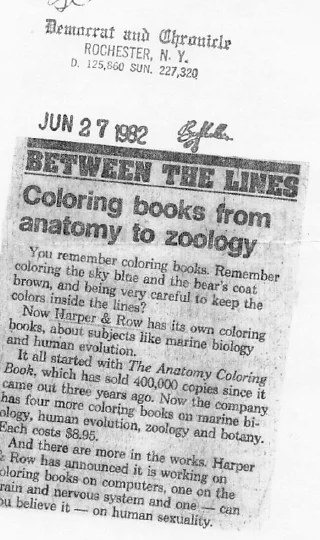
Sales top 250,000. Marine Biology, Human Evolution, Zoology and Botany follow.
1982
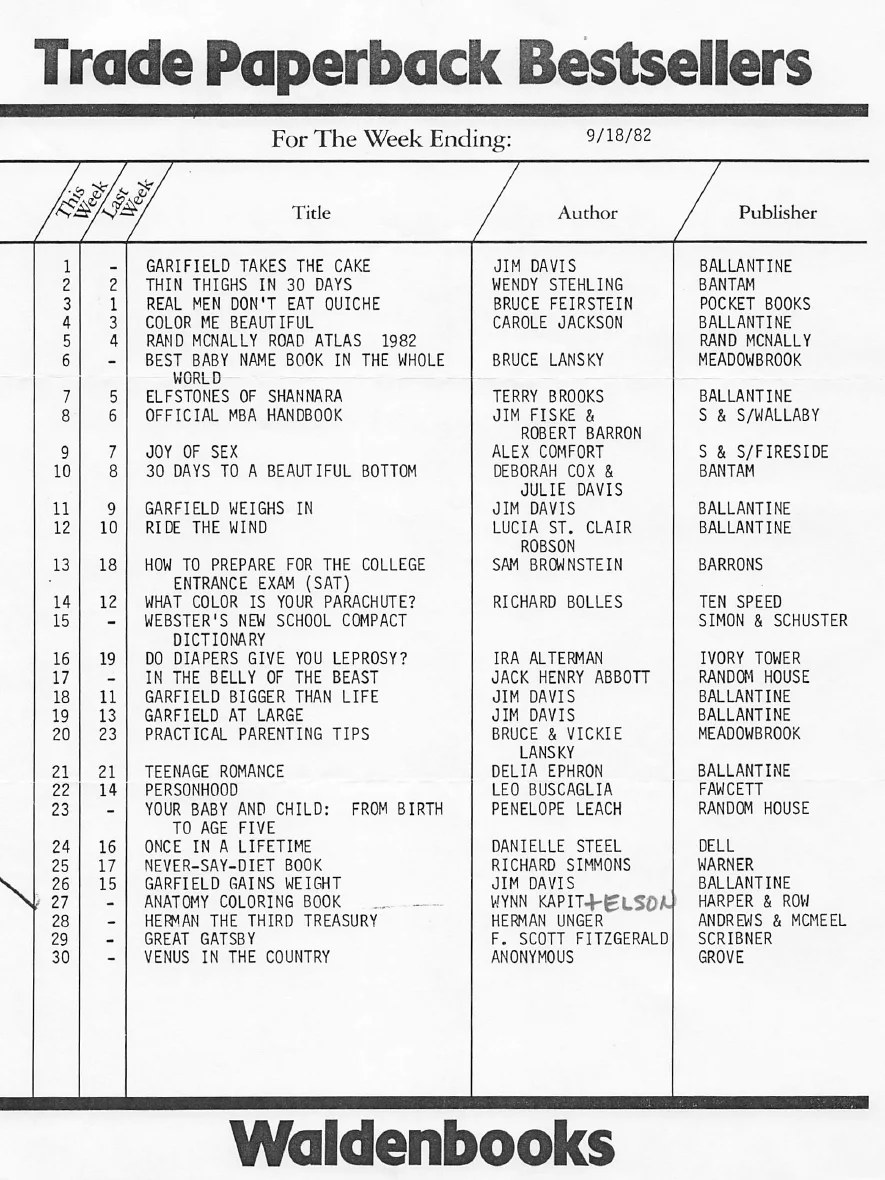
Over 500,000 copies, and a spot on the Waldenbooks national bestseller list.
Today
Twelve titles, a 4th Edition, 14 languages and millions of copies.
2027
The 50th anniversary of The Anatomy Coloring Book.
The #1 best-selling Anatomy Coloring Book · 1977 – 2027
The book that set the standard
For half a century, The Anatomy Coloring Book has changed the way people learn anatomy. Now in its 4th Edition, it has reached millions of learners around the world and is still the #1 best-selling human anatomy coloring book.
Join the celebration
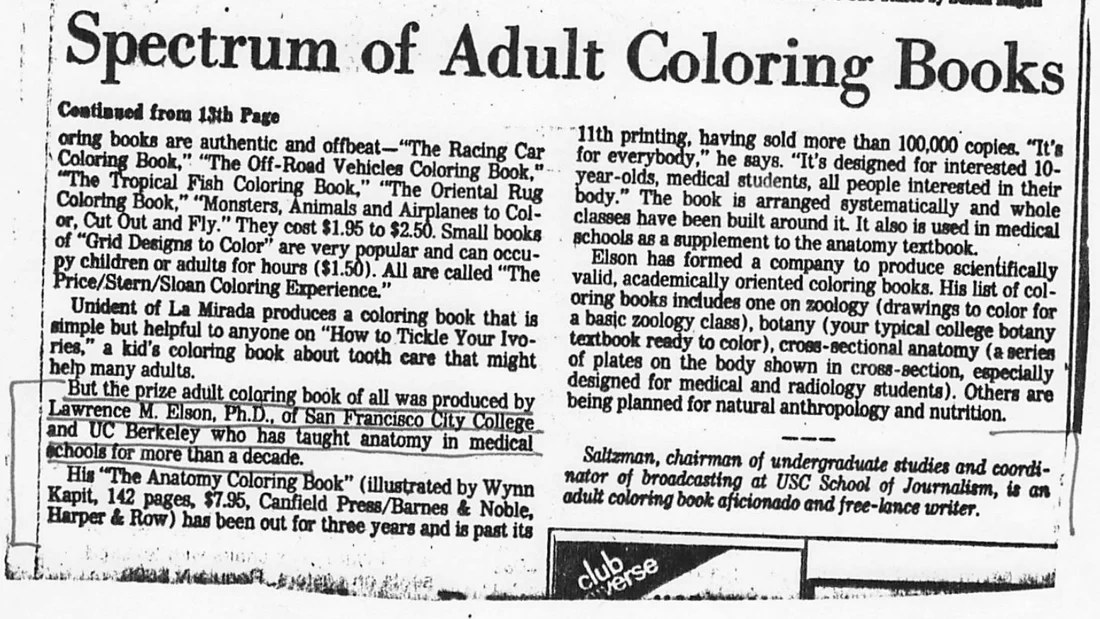
The prize adult coloring book of all.
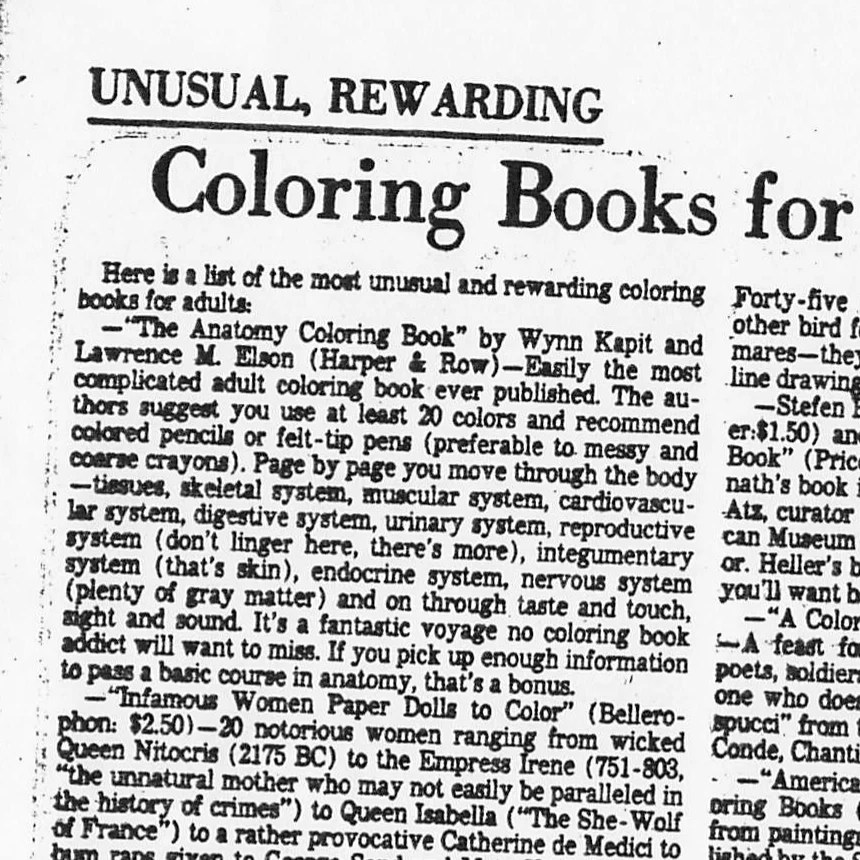
“It's a fantastic voyage no coloring book addict will want to miss. If you pick up enough information to pass a basic course in anatomy, that's a bonus.”
From the archive · 1980–1982
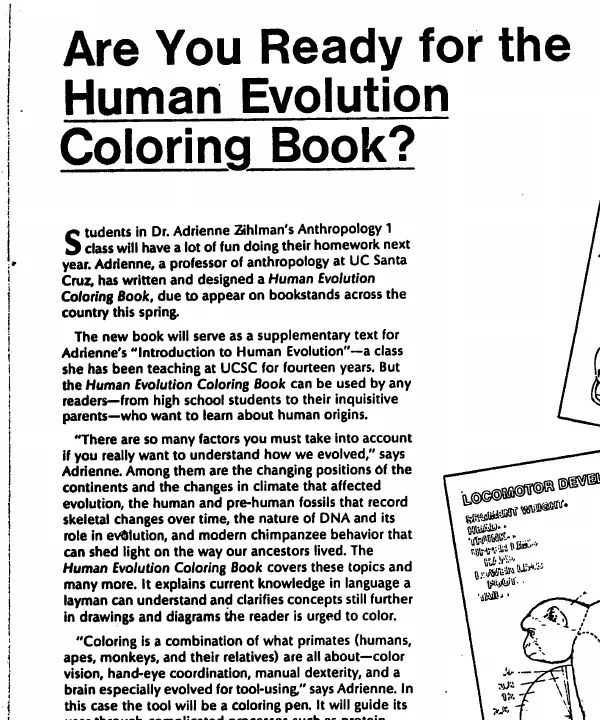
Coloring books for grown-ups? The press took notice.
Within a few years of 1977, The Anatomy Coloring Book was on bestseller lists and had started a whole series.
Letters from professors
Recommended by professors for nearly 50 years
Since 1977, professors have written to tell us they use The Anatomy Coloring Book in their courses and ask their students to buy it. Here are a few of their letters.
“A really important point about this book is that it taps an approach to learning presently poorly exploited: the active process of learning by visual mode (coloring).”
As quoted in Science Notes, UC Santa Cruz, Winter 1982
“[Short excerpt from the professor's letter recommending the book to students.]”
[Department, University]
“[Short excerpt from the professor's letter recommending the book to students.]”
[Department, University]